Recipe for Democracy
Recipe for Democracy reveals how feeding a defeated Germany became one of the United States’ earliest and most consequential Cold War strategies.
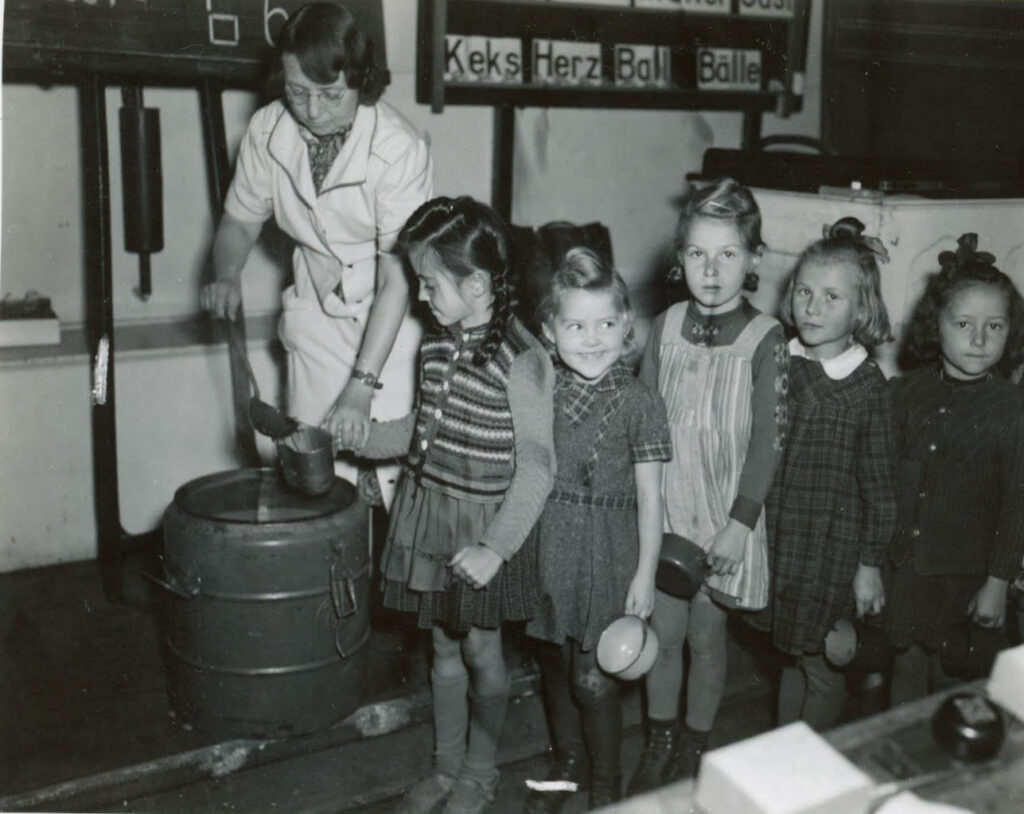
Photo: Army Signal Corps #292271, NARA
Recipe for Democracy: U.S. Food Power, Occupied Germany, and the Origins of the Cold War examines how food relief transformed the American occupation of Germany after World War II. Initially conceived as a matter of military necessity, food policy soon became a powerful diplomatic tool as U.S. officials confronted hunger, economic collapse, and mounting geopolitical tensions.
Feeding a former enemy was neither inevitable nor uncontested. Early occupation policies produced severe ration cuts and widespread nutritional deficits that threatened public health, military security, and political stability. Yet, in less than a year, American policymakers reversed course, embracing food relief as a means of rebuilding Germany and countering Soviet influence.
Bridging military and diplomatic history with food studies, Recipe for Democracy shows how food aid helped reshape U.S.-German relations and established food power as a central instrument of American Cold War strategy.
Forthcoming from the University of Virginia Press, 2027.
